fit for purpose / fit to purpose

 So I tweeted this recently...


(click on it to get the whole picture from Twitter)

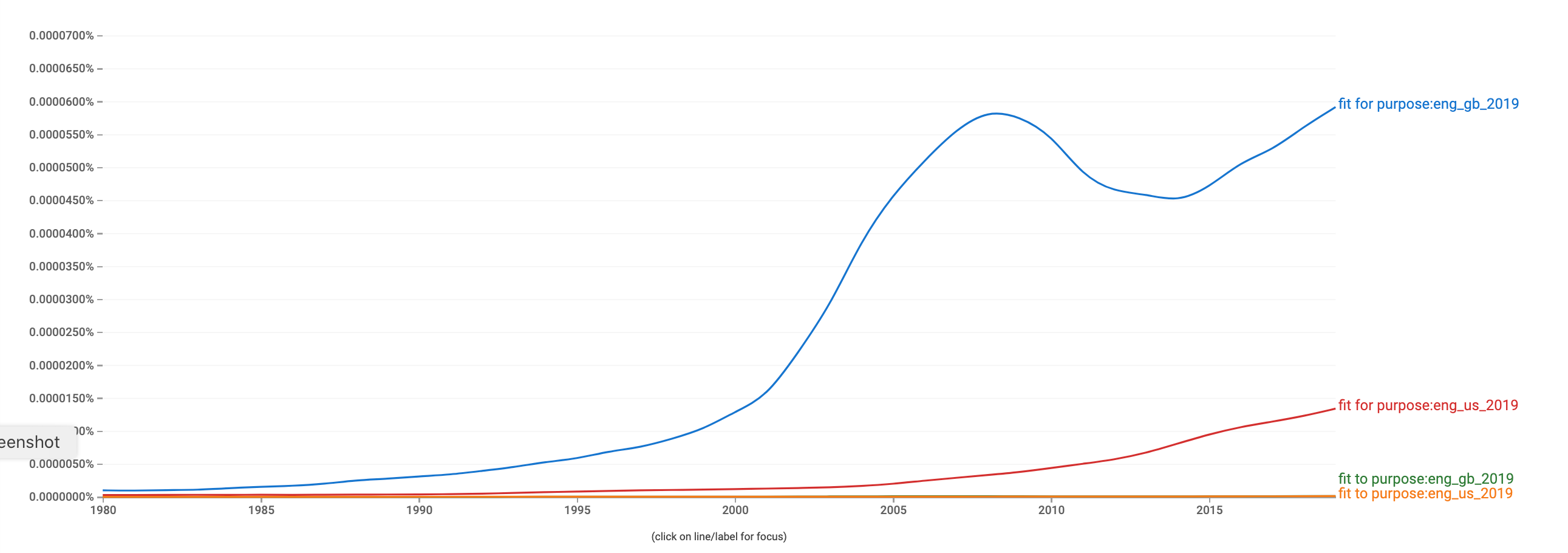
Here's another view of how much more fit for purpose is used in BrE, and how relatively recent it is:

(click to enlarge)

But then Stephen P wrote to point out this tweet by an American with fit to purpose:


In searching for that tweet on Twitter, I discovered other Americans writing fit to purpose. Their numbers are dwarfed by the number of BrE speakers saying fit for purpose, but it's an interesting development! 


The moral of this story: prepositions change easily. That's because prepositions don't have much meaning in themselves. 

This one doesn't seem to have shown up yet on Ben Yagoda's Not One-Off Britishisms, but then again, is it a Britishism in the US? Did Americans pick up fit for purpose and change the preposition, or did they pick up the rarer to and make it their own? There's the second moral of this story: calling something a "Britishism" or an "Americanism" is a complicated business. (And if you want to know how complicated, I have a book to sell you...)

Read more

crescent

 Reader Sam Fox wrote in with the question:

I am an American, a Midwesterner all my life, though I have traveled quite a bit..  

On a recent visit to London I was surprised to hear the word “crescent” in the tube stop Mornington Crescent pronounced with a z rather than s.  I think I heard other examples of unexected intervocalic voicing.  Is this something you have noticed?

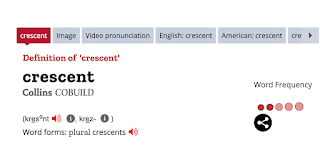
I have noticed it, particularly since I've had the word crescent is in my address. But I was surprised to find that UK dictionaries don't seem to agree about it at all.


In the /s/ camp:

  • The Oxford English Dictionary (a historical dictionary) [first picture]

  • Google [picture 2] 
  • Cambridge 

  • And all of the American dictionaries (Merriam-Webster, Webster's New World, Dictionary.com, American Heritage)


In the /z/ camp:    
  • Lexico (which comes from the people at Oxford Dictionaries) 
  • Macmillan (picture 3)


And presenting both, always with /z/ as the second option::
  • Collins, in both their English dictionary and in the COBUILD (learner's) dictionary. (picture 4)
  • Longman


Since the OED has only the /s/ and since /s/ > /z/ between vowels is the more likely phonological process, we can assume that the /z/ is somewhat new compared to the /s/, and so it's particularly interesting that two of the British sources only have the /z/. If anyone in the US says it with a /z/, I don't know about them. So we can say that this /z/ is a BrE pronunciation, but not the BrE pronunciation. (When it comes to pronunciation, there's probably next to nothing that one can count as the BrE.)

So how prevalent is the /z/ in the UK?  And who says it?

I listened to more than 50 examples on YouGlish, discounting a few along the way because they were the same person again or the person seemed not to have a UK accent. Of the 47 I counted, 23 had /z/, 23 had /s/, and one, by Alan Bennett, I just couldn't tell. So the dictionaries that have both seem to have good reason for it. 

At first, I was getting mostly /s/ and I thought that it was because there were a lot of 'posh' voices giving lectures about the Fertile Crescent. But as I went on, it became clear how varied the speakers who say /s/ or /z/ are. Both were said by young and old. Both were said by fancily educated people. There were a couple of Scottish voices that said /s/, but other than that it felt like both /s/ and /z/ were hearable around much of England. Among the /z/-sayers were Professor Brian Cox (from near Manchester, in his 50s) and Jeremy Paxman (in his 70s, born in Leeds but raised in Hampshire and sounding very much like his Cambridge education). I wonder if there are any dialectologists out there who could give us a bit more insight about whether this /z/ is particularly associated with one place or another? It doesn't seem to be a variation that was captured in the Cambridge Dialect App

Going beyond crescent, there are other spelled-s-pronounced-/z/ cases that contrast between AmE and some BrE speakers. The Accent Eraser*  site lists these ones, a couple of which I've written about before (see links).
  • Eraser
  • Blouse
  • Diagnose
  • Greasy**
  • Opposite
  • Resource
  • Vase
  • Mimosa
  • Crescent
  • Joseph (click on the link to see a lot more personal names with this difference)
These are lexical pronunciations—that is, speakers just learn to pronounce the word that way on a word-by-word basis, rather than a rule-based pronunciation, where the pronunciation is 'conditioned' by its pronunciation environment and it happens to all words that contain that environment. We can tell this isn't a phonologically conditioned variant because fleecy, which has an /s/ sound between the same vowels as in greasy, is never "fleezy". There's nothing these words have in common that makes them all go toward the same pronunciation—some are between vowels (a place where it's easy for consonants to take on voicing), but others are word-final. Some may have been pushed toward /z/-ness due to their similarity with other /z/-pronounced words: greasy–easy, resource–resort, and the like. 

My intuition about them is that they're very irregular across people. I just played a 'guess the word' game with my south-London-born spouse (50s), and he used /z/ for all of these except greasy and opposite, for which he used /s/. Who knows why?

I haven't got the time now to see how regular dictionaries are about their representations of these, but it strikes me that this would make a nice little undergraduate student project!

*Eek! "Accent erasing" is not something a linguist likes to endorse—you can be an accent replacer, but not an accent eraser.

** Forgot to mention: you do hear greasy with a /z/ in AmE. I think of it as southern, someone on Twitter said they think of it as midlands, but a friend from my northeastern hometown says it, so it's kind of irregular too.

Read more

come on!

I got this by email from a reader named Robbie:

A while ago I watched several episodes of the US children's show "Bubble Guppies" and found myself getting more and more annoyed with them. As in many preschool shows, the characters speak directly to the audience and encourage them to get involved with the story. Every time the scene changed (going from the park to school, from the classroom to the playground, etc.) one of the characters would turn to the viewer and say "come on!"

The more I thought about this, the more rude it sounded, and the more it seemed that you might be the person to ask!

Presumably all this repetition of "come on" doesn't sound impolite to American ears, since children's shows tend to teach politeness. To me it sounds peremptory and bossy, but does this apply to British listeners generally, or is it just me? I'm guessing an equivalent British show would be more likely to say "let's go" to the viewer, but perhaps also "come along" from one character to another.

And now I'm thinking of Dora the Explorer, who gets them both in (plus Spanish) with her song: "Come on, vamanos, everybody, let's go".


Interesting question. Phrasal verbs like this are tricky, because they are usually very polysemous (i.e. have many meanings). Phrasal verbs used in imperative form (as a command/request) are going to be even trickier because we don't just have the verb meaning, we have lots of pragmatics/politeness issues swirling around. So I expected this to be a very tricky thing to answer. 

Still from the video for this song. Click if you dare!


But then I looked in some dictionaries, and it is easy to see how different British and American lexicographers' estimations of the phrase are. The Collins dictionary website shows the contrast well. (The American English bit of the Collins website is from the Webster's New World Dictionary, written in the US.)

come on!

in British English

a. 
 hurry up!
b. 
 cheer up! pull yourself together!
c. 
make an effort!
d. 
don't exaggeratestick to the facts!

come on!in American English

Informal
used to signify
a.  
invitation, often to a different place
b.  
encouragement, urgency, etc.
come on! you can do it
c.  
come on! you can't be serious

American sense (c) is the same as British sense (d)—the 'objection' sense. That's always going to seem a bit impatient or rude. British senses (a) 'hurry', (b) 'cheer up' and (c) 'make an effort' might all be folded into American sense (b) 'used to signify encouragement, urgency, etc.'. Whether those uses are taken as rude or helpful is very likely to depend on the intonation they're said with. 

But American sense (a) doesn't really occur in the British treatment of the expression. Does BrE use  come along! instead?

Well, yes, but Collins English Dictionary doesn't know about that. Their definitions for come along are the same as their (a) and (c) definitions of come on! 

The Collins COBUILD dictionary entry (intended for English learners) does capture the 'invitation' sense, though they don't present it in the imperative form:

1. PHRASAL VERB
You tell someone to come along to encourage them in a friendly way to do something, especially to attend something.
There's a big press launch today and you're most welcome to come along. [VERB PARTICLE]

I do perceive difference between AmE 'invitation' use of come on!  and BrE 'invitation' use of come along!, though. I can imagine American adults saying come on! in a friendly inviting way to each other. Come on! Join us! 

But I have a harder time imagining British adults using it that way—to me it sounds very adult-to-child-directed. I imagine children lining/queuing up behind the teacher who tells them to Come along!

The fact that Come along! is less versatile than Come on! is clear from how much less you find it on the web in the GloWbE corpus:


I would love to show you how c'mon fits into all this and I'd love to look at Come on! Let's go!, but the corpus software can't seem to cope with the apostrophes. The Google books ngram viewer shows c'mon is more common in AmE, but that can't give us a sense of which senses of come on it's used for.


The comments section is open.  Come on and let us know what you think! It might help if, as well as letting us know which country you're from, you give us a sense of your age, since younger UK readers might have a different perception of it, especially if they were Dora the Explorer fans...
Read more

making and taking decisions

I've mentioned making and taking decisions before (15 years ago!), in the context of writing about light verbs. That was back in the days of shorter blog posts. The post began with a reader query:

Can you tell me why some people make decisions and others take them?

And I said (emphasis added): 
The reason, of course, is that some people speak some dialects and other people speak other dialects. AmE speakers generally make decisions and BrE speakers can also take decisions.

Make and take in these contexts are light verbsLight verb is defined by the Lexicon of Linguistics as "thematically incomplete verb which only in combination with a predicative complement qualifies as a predicate". In other languages, this usually means a fairly semantically-empty verb that occurs with another verb in a sort of compound-verb (Japanese and Korean have lots of these). In English, the term usually refers to verbs that add very little to the sentence but occur with nouns (usually) that have been derived from verbs. So, in this example's case, one could decide with a regular old verb, or make/take a decision with a light verb plus a nominali{s/z}ation of the verb decidedecision.

Because I'm thinking about the language of decision-making elsewhere in my life, I had a deeper look into how much decision-taking happens. The key thing to notice is that taking a decision is not the most comon way to say it in BrE. While BrE speakers (in 2012, when this data's from) write take a decision at six times the rate that AmE speakers do, they write make a decision at nearly 18 times the rate that they say take.

In popular discussions of language, there's a tendency for people to perceive phrases that one group says and the other doesn't as the British way versus the American way. But English gives us lots of ways to say lots of things, and the number of ways that one group has doesn't have to be the same number of ways as another group has. That's the case here. British has more light verb variation with the word decision than AmE has. 

There's another (not unrelated) tendency in popular transatlantic language discussions to assume that if BrE is using the same form as AmE when it has another form available, then they must be using the "more American" form because of "Americani{s/z}ation". Is that what's happening here?

Here's make/take a decision in Hansard, the record of the UK parliament (where lots of decisions happen!) over 210 years. You can see that people didn't use these constructions much before the 20th century, and at the start (before 1940), there is some preference for take. But the numbers and the  differences are small. Because the amount of data for each decade is uneven, one needs to look at the colo(u)rs when comparing across years. The darker the blue, the more 'of that time' the phrasing is. There are two things to notice about this: 
  • There's been more make than take since the 1930s. 
  • In 'the most take' decades (1960s onward), take is playing second fiddle to make.
  • If there's AmE influence, it's happening well before mass media. 
  • There might be a different pattern emerging for making a decision versus taking the decision. Maybe taking feels more definite than making. After all, things come into existence through making. We take things that are already known to exist.

As for the history of AmE, it's a pretty solidly make place, with just a bit of take in the 1940s—and then a spark of it in the 2010s. Nascent British influence? Looking at US occurrences of it in his Not One-Off Britishisms blog, Ben Yagoda calls it 'a novelty'. 


Going a bit deeper into the history, the OED tells us that make a decision has been around (in England) since the early 1600s, and take a decision shows up (in London) in the late 1700s, in a period where the US and UK aren't talking to each other much. This helps explain why make is more present in all of the time periods in both places and why take has no roots in AmE.


So there's what I've been looking at recently! 

Read more

The book!

View by topic

Abbr.

AmE = American English
BrE = British English
OED = Oxford English Dictionary (online)