Showing posts sorted by relevance for query "my mother". Sort by date Show all posts

a personal note

I have a proper blog post planned, but I felt like writing this first.

I took a break from blogging and tweeting for a bit because my mom died after an extremely short and unexpected illness. It just so happened that I was already on my way to visit her in the US when she fell ill, which was the only thing that could be considered a piece of luck in this whole horrid experience.

I've gone back and forth about whether to say anything about this here because I really don't want to read more sympathy messages--as kind and heartfelt as they might be. Thanks for thinking them, if you're thinking them. That's plenty. I've closed the comments on this post in order to remove the temptation.

But if you like what I do here, please give my mom some credit for it. She was an elementary/primary school teacher who loved words and who supported me in my education and who was proud of what I do with it. (She sometimes turned up on this blog for her observations and opinions on BrE and her foreign son-in-law's use of it.) She was also a fantastic contributor to her community and beyond--as a non-stop volunteer (particularly at our local hospital, where she spent more than 3000 hours of her retirement transporting patients) and a contributor to just causes. 

So, if you would like to hono(u)r my mother for her role in making this blog possible (or if you'd just like to hono(u)r my mother), I ask you to pay it forward by doing something good for other people that you might not have done otherwise. There is a new scholarship fund in my mom's name for students from my old high school who want to pursue education or medical degrees, and I could tell you how to contribute to that if you sent me an email. But since you probably don't know my hometown, that doesn't seem like the most relevant thing for you to do, and there are many, many good people-helping causes out there in the world. So, if you could spend a bit of your time or money on supporting one, then that would be a wonderful tribute. I don't really need (or want, actually) to know what you choose to do with this request. I just want to be able to believe that something good is happening somewhere.

Thanks for reading to the end! Regular (that is to say, irregular) blogging will resume shortly.  In the meantime, here are posts that use the words 'mom' and 'my mother'--i.e. the ones in which I've talked about my mom, plus a few stragglers with those words, but not my mom.
Read more

high tea

My reasons for not posting in more than a week form a list that is even more boring than long. My need to say that, in the egotistical hope that someone cares, is even more pathetic than it is banal.

But one of those reasons is that my parents are visiting, having come to meet their newest granddaughter, Grover. And visits from Americans are always good for a fresh supply of linguistic gaffes and confusions. My dear mom, for example, demonstrated a widespread American misapprehension of a British term when she informed me that she went to high tea at my nephew's school on Valentine's Day. Knowing that she was referring to something more like a tea party with tea or other drinks and some sort of baked good, and being the obnoxious daughter that I am, I replied, "No, you didn't."

The website What's Cooking America works hard to disabuse my fellow Americans of that misunderstanding:
Most people [i.e. Americans] refer to afternoon tea as high tea because they think it sounds regal and lofty, when in all actuality, high tea, or "meat tea" is dinner. High tea, in Britain, at any rate, tends to be on the heavier side. American hotels and tea rooms, on the other hand, continue to misunderstand and offer tidbits of fancy pastries and cakes on delicate china when they offer a "high tea."
What the hotels (and my nephew's school) are offering is actually low tea, more commonly (in my experience) referred to as afternoon tea. A particular subcategory of afternoon tea is the cream tea, which involves tea and scones with clotted cream and (almost always strawberry) jam. (We've booked a cream tea after Grover's naming ceremony on Sunday, which seems a little unfair, as she's not yet on solid foods--or even tea, for that matter.) My mother keeps asking if people 'still' have afternoon tea, and I reply "people will take a tea break, like a coffee break', and she'll say that she means do they have cucumber sandwiches and scones and so forth. (My mother seems to be jealous of any culture that fits an extra meal into the day.) Better Half and I have to explain that eating cucumber sandwiches in the afternoon is not something that the masses ever did much.

Back to high tea: I've never heard a British person use the term. They say things like I have to get home and make the children's tea, by which they mean their evening meal. In my experience, tea, when referring to a meal, is used by my friends mostly to refer to simple meals they make for their children or themselves in the early evening; a dinner party, for example, would not be referred to as tea.

Now, we could get into the different uses of other meal terms like dinner and lunch and
supper in the two countries--except that there's so much variation in meal names within each country that anything I could say from my own experience would be only a small bit of the picture. In the US, the use of meal names varies mostly by region (and, I'd suspect, by age). (See these maps for some info.) In the UK, there is a heavy social class element involved--so that Nancy Mitford, in classifying some turns of phrase as U ('upper class') or non-U, claims that calling the midday meal dinner is non-U, while calling it luncheon is U.

In fact, reader Paula wrote in the summer asking for coverage of an aspect of the meal-name problem:
Here in my area of North Carolina(US) we still use "dinner" to describe the noon meal. When I visited Australia and New Zealand, they also used "dinner", which made me feel right at home. The poor little Northern US children that traveled with us were quite confused since they thought "dinner" was the evening meal, lol.
How about it, how common is the word "dinner" now when "lunch" seems to be used more and more.
...and I've been avoiding the question ever since. So feel free to weigh in on the matter in the comments!

Read more

à la carte

In my last, menu-related post, I cheated and let someone else do all the work. As my penance, I'll do the work on this menu-related one. Moe wrote (a half a year ago) to ask:
I'm from the US and my boyfriend is from Liverpool. Last night at a restaurant (US) he ordered a sandwich a la carte. I asked him if he wasn't hungry enough to get the fries\chips that came with the sandwich. This launched into the discussion of him stating, rightly so, that a la carte means "according to the menu". By his definition, this means just ordering from the menu directly instead of special ordering.

From my understanding and from what I've asked other Americans, a la carte means in resturant terms "by itself". Meaning if you order a steak a la carte, you would not be receiving mashed potatoes or other items along with it.

Is his understanding correct in Britain and if so, what would they ask for in a restaurant if they wanted an item "by itself"?
This is as much a difference in our expectations of how restaurants work as a difference in language, I'd say.

À la carte comes from French, bien sûr, and is used in opposition to table d'hôte--more commonly called (these days) prix fixe. In the prix-fixe situation, the restaurant offers a meal of several courses with few or no choices as to what you get in which course. You get what the chef has decided to put together. In the US, I think I've only ever seen this in the most expensive restaurant I've ever been to, though I suppose it's the same thing as a meal deal at a fast food restaurant. (But I've yet to come across a burger (BrE) pedlar/(AmE) peddler who asks you if you want your Big Mac à la carte. I believe the appropriate idiom is the sandwich or the meal?) In the UK, prix fixe is a more familiar concept--both because more British people will have experience of eating in France, where prix fixe menus are common, and because they're not entirely uncommon in the UK. That is to say, I've had prix fixe in the UK at restaurants where the (AmE) check/(BrE) bill was more in line with the cost of a ticket to the theat{er/re}, rather than the cost of a ticket to Hawaii.

Ordering à la carte, then, is ordering from the (individual courses) menu rather than ordering (AmE) the whole shebang/(BrE) the full monty. So, Moe's boyfriend saw himself as ordering a sandwich as it comes according to the menu (which may be with chips/fries or what have you).

But while we don't in the US think of ourselves as having prix fixe menus, it is the case that restaurants often distinguish between 'dinners' (sometimes called entrees in this case) and simpler courses. For example, a menu might be divided into 'pasta', 'sandwiches', 'pizza' and 'dinners'. Where I come from, a popular dinner is prime rib.1 If you order prime rib, they might ask you if you want the dinner or to have it à la carte. If you have the dinner, then it will come with salad (or sometimes the option of soup) and one or two side dishes. This always flummoxes Better Half when we go to a certain restaurant in my hometown. He orders his portobello mushroom thingamajig and is then somehow offended when asked what kind of dressing he wants on his salad.2 (Even worse, they expect him to eat his salad before his dinner! The injustice of it all!) My mother, on the other hand, is regularly shocked and dismayed when she orders a main course in England and gets only what it says on the menu--a piece of meat. And you should have heard her when she ordered veal parmesan in Ireland and wasn't served a side of spaghetti with it.3 If the menu says 'rib-eye steak' or 'veal parmesan', then you're probably going to have to look at the side-dishes menu if you want any vegetables. The exception to this, of course, is if it's a roast dinner at Sunday lunch. If it's Sunday lunch, you will be served so many vegetables that you could conceivably fulfil(l) your five-a-day requirements until Wednesday.

So, it looks like Americans have sort of reinvented the prix-fixe menu as 'dinner', but don't really think of it as a menu--just as the main course. When they want a simpler and less expensive meal, they order à la carte, which almost means 'off the menu' in this case. The equivalent in the UK would just be to say 'I'd like my steak without the potatoes, please', and I'd be very surprised if that made it any cheaper for you.

And just in case all this reminds you of (AmE) à la mode, let the link take you there.

1 I've never seen prime rib in the UK, though the term itself is not an Americanism. Instead of having rib roasts and prime rib, one tends to see thinner-cut rib-eye steaks on UK menus. Someday, when I have a lot of energy, I will have to do a post on different cuts of meat in the two countries. In the meantime, please consult the maps of cows on Wikipedia.

2 I've never been asked what kind of dressing I want on my salad in the UK. You get what you get, and it usually tastes of mustard. My commenting on this will probably send some people to the comments section to exclaim that American salad dressings (particularly French and Russian) have disingenuous names--since the comments section serves as a magnet for salad dressing-related complaints.

3 I've started to think of BH and my mother as two sides of a coin, which raises the question of what/whom he's the better half of. Maybe it means it's a good thing I'm turning into my mother. Now I'm just confusing myself.
Read more

River X, X River

We start this post with an email from former (non-linguist) colleague Andy:
I discovered my Railroad Tycoon 3 DVDs today. [...]
This is an American game, so it's not surprising that it uses AmE usage. Even on European maps. In particular, it's really odd seeing "Thames River" or "Severn River" or for that matter (on the France map) "Seine River".

BrE usage is always "River x". Same in French, Italian, I can't for the moment think of the usage in German - though I bet it's a compound.

AmE is "x River". Why the change? The only countercase I can think of is the Gospel songs referring to "That Jordan River" which I suspect are actually AmE originally in any case.

In any case all of these uses sound really wrong to my BrE ear. About the only exception I can think of is "East River", but then the river's not actually called "East", is it?

An AmE countercase is of course the classic Standells track, "Dirty Water", which refers to the "River Charles". But then, it's Boston, so I guess that doesn't count as proper AmE.
Let's start at the beginning, or near enough to it.  Before the late 17th century (according to the OED), the normal way to refer to rivers was the River of X.  Here are some of the OED's examples from around that time:
1548 Hall's Vnion: Henry V f. xxxiii, Borne at Monmouth on the Riuer of Wye.
1565 in R. G. Marsden Sel. Pleas Admiralty (Selden Soc.) II. 55 Honnefleur and Rouen and other ports in the revere of Seine. a1616 SHAKESPEARE Antony & Cleopatra (1623) II. ii. 194 She purst vp his heart vpon the Riuer of Sidnis. 1652 M. NEDHAM tr. J. Selden Of Dominion of Sea 218 Those words concerning the River of Rhine. 1710 J. CHAMBERLAYNE Present State Great Brit. II. I. 323 It's watered with the pleasant River of Clyde.
From the late 17th century, the of started to be dropped, so then we get the River X, as in the River Thames, the River Clyde, the River Cam, etc.  But what else was going on in the 17th century?  Oh yeah, the English coloni{s/z}ation of North America.  So this is about the time when we'd expect to see transatlantic differences starting to develop.  If linguistic changes are happening in England, then they'll mostly stay in England, while the English speakers in America are off on their own linguistic path.

One possible scenario then, would be that BrE would come to have River Thames while AmE would still have the of: the River of Mississippi, say.  But the loss of of had already started by the time most of the colonists would have come over, so perhaps it's not surprising that it got lost in the soon-to-be US too.

It might seem odd that the loss of of would cause the nouns to swap/(BrE alternative spelling)swop places, resulting in X River, but I can think of some reasons why it isn't too odd:
  • First, consider the possessive use of of, as in a friend of my mother('s). Get rid of the of and we have to move my mother before the friend (and add a case marker, 's): my mother's friend.  So, there is an existing relation between grammatical constructions of the forms X Y and Y of X.   
  • Second, English generally puts grammatically simple modifiers before the nouns they modify.  So, unlike French, for instance, we say red chair, not chair red.  Since river is the 'head noun' in the river-name construction, it would seem most natural to put river after its descriptor.
  • A clear exception to the last generali{s/z}ation is what often happens with names of lakes and mount(ain)s: Lake Superior, Lake Titicaca, Lake Geneva; Mount Everest, Mount Rushmore.  But still, there are plenty of geographical features that put the name first: roads, streets, and lanes; seas and oceans; islands, deserts and so forth.
  • Some of what would become the original 13 colonies were first coloni{s/z}ed by Sweden and the Netherlands.  Swedish puts 'river' (älv) after the name.  Dutch (modern Dutch, at least) seems to not have a word for 'river' (rivier) as part of the name at all: it's just de Rhône, de Maas, etc.  I don't know how much linguistic influence these colonial powers might have had (not much, in the case of the Swedes, though they certainly named some things), but they're at least worth mentioning as a counterbalance to Andy's observation that the Romance languages put the 'river' first.
 The Wikipedia article on AmE/BrE differences lists some exceptions to each dialect's rules:
Exceptions in BrE include the Fleet River, which is rarely called the River Fleet by Londoners outside of official documentation, and also where the river name is an adjective (the Yellow River). Exceptions in the US are the River Rouge and the River Raisin, both in Michigan and named by the French. This convention is mixed, however, in some Commonwealth nations, where both arrangements are often seen.
Incidentally, the River Charles that Andy refers to is much more usually called the Charles River.

Another thing that might be considered an exception in BrE is what happens when the name of the river is used as a modifier for another noun.  One sees quite a few Thames Rivers in things like Thames River Authority, Thames River Police, Thames River Valley, and Thames River Cruises. Now, of course, we have the option here (especially in the last two cases) of parsing this so that Thames River is not a constituent phrase.  That is, is it:
[Thames River] Authority        or        Thames [River Authority] ?
I would suspect that most BrE speakers would vote for the latter, though that's not how I'd parse the American equivalents.

One also sees Thames River in BrE when it's plurali{s/z}ed, as in Thames Rivers Restoration Trust, which works to improve the Thames and its tributaries.  In this case, Rivers Thames would not be appropriate, since the tributaries are generally not named Thames, so in this case Thames is descriptive (like East or Yellow), describing the locations of the rivers, rather than just naming them.  Usually when referring to more than one river by name in BrE, the river+name order is maintained with river marked as plural, as in "The Environment Agency runs the rivers Thames, Nene, Great Ouse, Medway, Welland, Glen and Ancholme" (waterways.com).

BrE speakers generally use the American word order when referring to American rivers. One doesn't hear the River Mississippi much (though Julian Barnes uses it in Flaubert's Parrot), and this seems to extend to the rest of the new world--BrE prefers Amazon River (7 British National Corpus hits) over the River Amazon (2 hits), but really prefers just the Amazon (over 300 hits).   For European and African rivers, it's River X all the way.  So Germany has the river Main in BrE, but the Main river in AmE--and it's the latter that the local tourist board goes for.  Whether that's because the Germans have more affinity for AmE/American tourists or whether it's because that ordering is more natural to German I'm not sure--the German version of the website refers to it only as Der Main.  German speakers?

I've had a quick look for rivers in the US and UK that have the same name, but haven't succeeded in finding any--but we can see what happened when the English River Avon went to Canada and Australia. According to Wikipedia, the New World versions are Avon Rivers.
    Read more

    colo(u)rful sauces

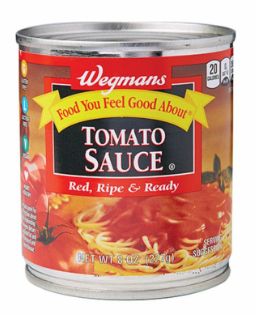
    In 2009, my parents came over from the US and we took a trip to Italy: Florence, Pisa, and Rome. The food, of course, was gorgeous, but often clashed with what my mother thought of as "Italian" food—the type that one gets in the northeastern US, where Italian immigrants brought over a lot of southern Italian dishes, which were then adapted as tastes and ingredients changed. Because of this, she repeatedly asked "Is it in a red sauce?" Many of the waiters found this a strange question, but they could deal with strange questions from paying foreigners. My British spouse, however, found it too annoying: "What do you MEAN?" And Mom would say "You know, a red sauce. Like [AmE] spaghetti sauce". But he didn't necessarily know, because naming sauces by colo(u)r seems to be a peculiarly monocultural thing. 

    red sauce

    Red sauce was only added to the Oxford English Dictionary (OED) in 2005, so its definition is pretty up-to-date and shows the American sense:

    (a) n. Any of various sauces that are red in colour, esp. (in the United States) a tomato-based sauce of southern Italian origin; (b) adj. (attributiveU.S. of or designating a type of Italian American cuisine characterized by the use of tomato-based sauces.

    Wikipedia tells us:

    Red sauce may refer to:

    That list demands a translation and a synonym. Marinara sauce in AmE refers to a rather plain tomato sauce for pasta—the default pasta sauce in the US. It is so-called because it was reputedly the kind of simple sauce made or eaten by Neapolitan sailors. In the UK, one sees the word marinara on Italian menus referring to seafood sauces.

    An Australian ketchup
    An American passata
    As far as red sauce referring to ketchup in the UK, I have heard it, but not often. Ketchup is the most common word for it in both countries, though Britons are six times more likely than Americans to call it by the full tomato ketchup (six times more likely in the 2012–13 GloWbE corpus, eight times more likely in the more recent NOW corpus). You sometimes hear in BrE the more AusE tomato sauceIn AmE, that doesn't mean 'ketchup', but is the equivalent (more or less: see comments) of the stuff that in BrE is usually called passata.


    brown sauce

    The British have brown sauce, of which HP Sauce is the original and most famous example. It's a condiment one buys in a bottle, made with vinegar, fruits, and some form of sugar. It is most often used with breakfast, and we've seen it before in my opus about bacon sandwiches.

    Wikipedia's photo at brown sauce

    In this vein, Americans have A.1. Sauce, which we never call brown sauce. Since the 1960s, it's been marketed as A.1. Steak Sauce—which points to another American sauce term. Steak sauce, Wikipedia tells us, is:
    a tangy sauce commonly served as a condiment for beef in the United States. Two of its major producers are British companies

    That last bit was news to me. I import A.1. from the States because I love it so. (I find it spicier and less treacly than HP sauce. It's also much darker.) In the UK, I've only ever seen it in Fortnum and Mason (extremely chichi shop), where they charged in the double digits for a bottle, apparently imported from the US. But A.1. (in some formulation) may still be being made in the UK for export to Asia! (The most recent reference to this I've found is 2018.)

    Back to brown sauce. The OED definition has not been updated since 1888, and it has only the French-cuisine inspired meaning, akin to gravy: "A brown-coloured savoury sauce, esp. one made with browned fat and flour." When I was a(n American) child in the 1970s–80s learning about cooking, I learned this among other sauce terms—though I can't say I've ever heard it in my adult life. 

    But brown sauce was another bit of my mother's terminology that didn't help when travel(l)ing: she'd talk about her Chinese food preferences in terms of preferring brown sauce over white sauce, and British Spouse didn't understand what she meant. But, she knew what she was talking about. Goodcooking.com has a story about a sauce master at a Chinese restaurant which includes (with recipes): 

    Two basic sauces are the brown sauce and white sauce. Brown sauce is mainly for meat dishes; beef, lamb, duck, yet he also used it in his Chendu Fish dish, to bind together moo shu and one of his tofu dishes. The white sauce was for fish and seafood, chicken and vegetable dishes. Other ingredients such as black beans, chili with garlic, preserved vegetable, ginger and garlic were added as items cooked and then his sauces were added, seconds before service to bind everything into a flavorful dish. 

    From the spelling of flavorful, we can guess that this Chinese restaurant was in the US, and from a little knowledge of Chinese food in the anglosphere, I would guess that (a) this might be based in some specific regional Chinese cuisine, and (b) the term is not much used in British Chinese cuisine. Having had a lot of Chinese takeaways/takeout in the US, UK and South Africa, I can report that even if you're ordering a dish of the same name (chicken in garlic sauce, sweet-and-sour pork, General Tso's chicken etc.), they are very different in different places. (Let's just say: my English family always makes a point of having Chinese food when we're in the US.) Yummly.co.uk has many recipes for Chinese brown sauce, but, despite the 'uk' in its URL, all the brown-sauce recipes I checked there have American terminology (cornstarch, scallions, chicken broth/bouillon etc.). If there were any urge to call Chinese sauce base brown in British English, it would probaby be blocked by the clash with the breakfasty condiment. 

    white sauce

    White sauce has at least the following meanings: 
    • In (US, at least) Chinese cuisine, it's the opposite of brown sauce. (This site says it's typical of Cantonese cooking.)
    • A sauce base made of "roux of butter and flour combined with milk or cream" (OED). 
    The OED's (2015 updated) entry includes only the last of these, which is often used in French cooking. It's also what my mother used as the opposite of red sauce in Italian cooking, so an Alfredo or similar. 

    Speaking of white sauces in Italian cooking—I grew up hating (AmE) lasagna/(BrE) lasagne because I couldn't stand the ricotta cheese. Well, it turns out, British people don't make lasagne with ricotta (nor do many in Italy). Instead it has a béchamel sauce. Meanwhile, I've outgrown my hatred of ricotta. Still, lasagn{a/e} is the last thing I'd order on any pasta menu.


    Finally,

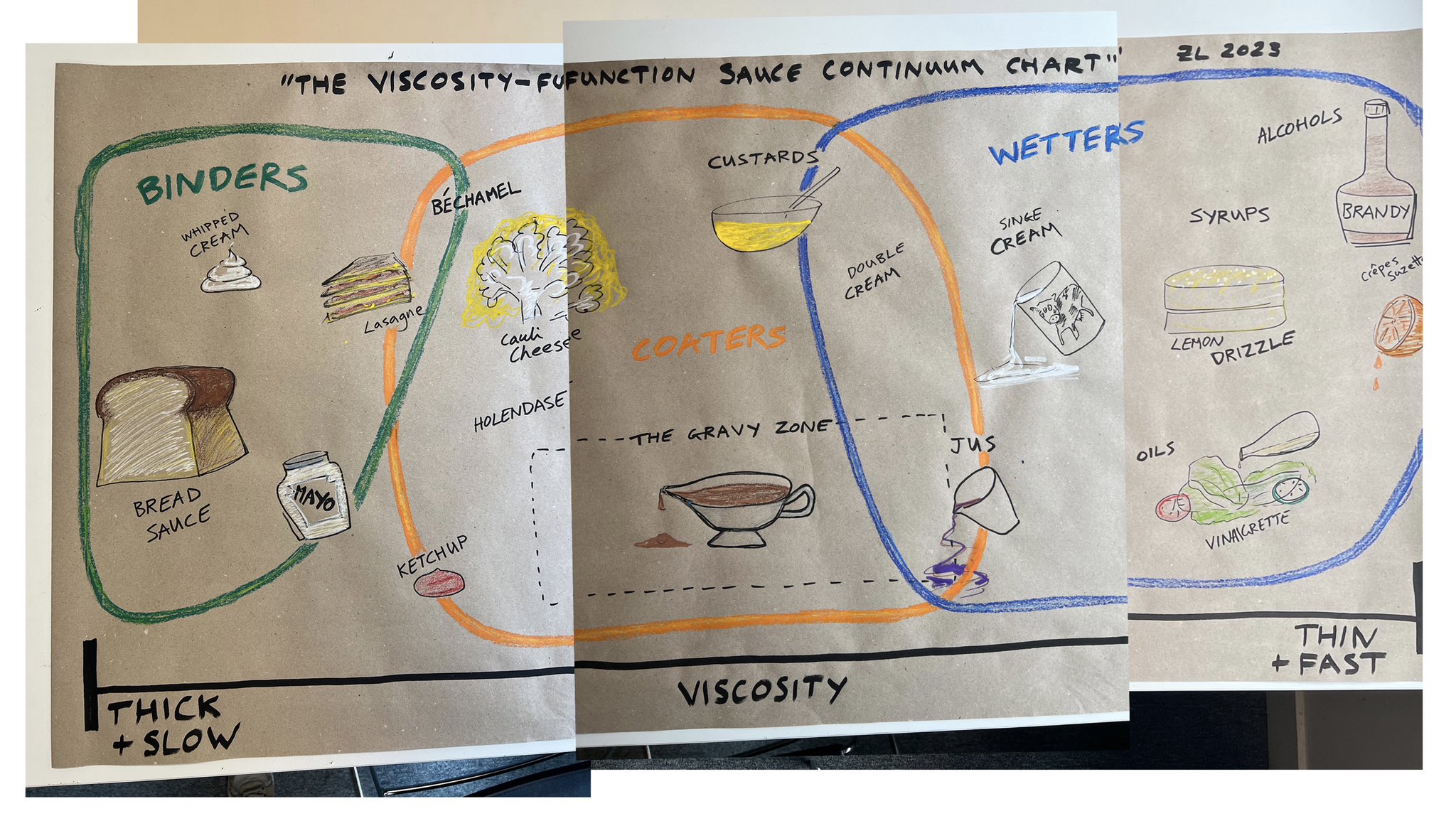
    for the fun of it, a Venn diagram of sauces by Zoe Laughlin,  recently discussed on BBC Radio 4 and pointed out to me by one of my writing group pals:


    Read more

    clever and smart

    The Professional Association of Teachers has voted that bright British school children should not be label(l)ed clever, but instead should be deemed successful--because among children it's not cool to be clever.

    In AmE, clever is not as often used to refer to people. You might make a clever chess move or write a clever limerick, but that would prove that you were smart. In the UK these days, smart is more often used to refer to how someone dresses, rather than their intelligence.

    A related BrE term is smart casual, meaning 'dressed informally, yet neatly and stylishly'. When my mother visited me in South Africa in the mid-1990s, a hotel's notice that the dining room had a smart casual dress code nearly sent her into crisis. She kept saying, "What does that mean? Can I wear slacks? What does that mean?"

    The OED has a draft entry (now a full entry) for smart casual, which goes:
    Chiefly Brit. Designating or characteristic of (a style of) dress which is informal yet smart, esp. smart enough to conform to a particular dress code.
    I really doubt that definition would've helped my mother. Interestingly, the first use of smart casual that they've found, from 1945, comes from the New York Times, but the term, as evidenced by my mother's confusion, hasn't enjoyed the currency in the US that it has in the UK and other areas where smart is more likely to refer to dress style. Wikipedia has business casual as an equivalent for smart casual, but it isn't quite the same. You might see smart casual on a wedding or party invitation in the UK, but I can't imagine being invited to a business casual wedding.

    Some clever BrE idioms are:
    • clever dick, clever clogs = someone who is cleverDads have come out on top of a new survey which asked children who they thought was the cleverest person in the world. One in four (27%) children felt that their Dad was the smartest of all, with Mum's [sic] just behind with one in five (19%) of the votes.
      However, the gloss may have been taken off the victory for Mums and Dads, with some of the other results confirming that children say the funniest things. David Beckham was perceived to be a clever clogs by one in six (17%)
      --UKparents.co.uk

    • to box clever = to be shrewd, to use your wits (hence the adjective boxing clever, which may be familiar to US fans of Elvis Costello and/or Placebo) Emma is finally goaded into action and realises that she must box clever to force Nadia out of her life for good. --UK TV Guide
    • [That's/It's] not big or clever = It's unappealing and stupid.Yeah, so I know it's not big or clever to like Oasis, but I always did and I guess I still do. --Paste Magazine

    Trying to think of smart/clever idioms that are found in general American English, but not British, is tougher--as most have made their way over. The OED lists to be/get smart (with someone), meaning 'to be impudent' as US, and it's true that one would usually hear don't be/get clever in the UK, but the American version is understandable. Similarly the [originally AmE] term street smart(s) is generally understood in the UK. There are some US regional uses of smart and clever that go back to other regional BrE uses, but those are foreign enough to me (and one expects rather old-fashioned), that I can't pretend to be an expert on them, so I'll let the American Heritage Dictionary do the talking:
    In the 17th and 18th centuries, in addition to its basic sense of “able to use the brain readily and effectively,” the word clever acquired a constellation of imprecise but generally positive senses in regional British speech: “clean-limbed and handsome,” “neat and convenient to use,” and “of an agreeable disposition.” Some of these British regional senses, brought over when America was colonized, are still found in American regional speech, as in the South, where clever can mean “good-natured, amiable” in old-fashioned speech. The speech of New England extends the meaning “good-natured” to animals in the specific sense of “easily managed, docile.” Perhaps it was the association with animals that gave rise to another meaning, “affable but not especially smart,” applicable to people when used in old-fashioned New England dialects.

    Smart is a word that has diverged considerably from its original meaning of “stinging, sharp,” as in a smart blow. The standard meaning of “clever, intelligent,” probably picks up on the original semantic element of vigor or quick movement. Smart has taken on other senses as a regionalism. In New England and in the South smart can mean “accomplished, talented.” The phrase right smart can even be used as a noun meaning “a considerable number or amount”: “We have read right smart of that book” (Catherine C. Hopley).
    These days, on both sides of the Atlantic, smart is used more and more for technology that can apply itself in apt ways--hence smart bomb, smart card, etc. That this is used in BrE is a testament (not that we need it) to the force of American English in the world.
    Read more

    partner

    I looked at my collection of e-mails from readers that request coverage of this or that Americanism or Briticism. The collection contains just those that I've not blogged about yet and that I think have at least a little potential to be an interesting post. At my current rate of one post a week, it'll take me a year to get through them--that is, if each e-mail has only one request in it. Maybe a year and a half, then. And they just keep coming in! If you ever thought I'd be out of bloggable ideas by the third year in, you were wrong. (And we're not even counting the topics on my own lists of questions I want answered, gripes I want to air, and little jigs I want to dance on your computer.)

    With such a backlog (the ones that I consider answerable go back a year now), it seems a bit unfair that I'm going to write about the one that arrived today. Blame my mother. Whenever my brother didn't get into trouble when any reasonable person could see he was guilty as sin (He really was on my side of the car seat! And besides, HE'S LOOKING AT ME FUNNY!), my mother would explain "Life isn't fair." I took logic (AmE) in college/(BrE) at university, so I figure/reckon: Life isn't fair, and I'm alive, so I don't need to be fair. Right?

    Regular reader/requester Jackie wrote today to request coverage of the BrE use of partner (since some of the requests I'm ignoring in order to do this one are hers, it's not that unfair, is it?) . She sums up the situation:
    When I lived in London I was forever getting confused by people referring to their heterosexual partners as their partner. In the U.S., when someone refers to his or her "partner," it usually means the other person is the same gender. Or that they are in business together, a source of frequent confusion here. I don't know if it's worth discussing, but do you know how the words acquired the narrower meaning in the U.S. (or the broader reading in the U.K.)?
    I am going to come out of the closet and tell you that I LOVE partner! In the UK, it is the unmarked--which is to say normal, usual-- way to refer to the person you share your life with (but usually aren't married to). It's gender-free, works as well for gay and straight relationships, doesn't infantali{s/z}e either party. It's wonderful. In fact, I love it so much, that it's still how I refer to Better Half, even though the law has intervened and I could call him my husband now. It's just such a grown-up, practical word, and I feel grown-up saying it. (I think I'll be at least 70 before I stop getting a kick out of being an adult.)

    Jackie asks how it came to be this way. How? Hard to tell without a lot of etymological research, which I haven't the wherewithal to do now. But I can tell you this: the OED has examples of partner meaning 'spouse' going back to Milton (17th century). The business sense goes back a to the 15th century. In between, the word was extended to include dancing partners and bridge partners, etc. The OED comments:

    Now increasingly used in legal and contractual contexts to refer to a member of a couple in a long-standing relationship of any kind, so as to give equal recognition to marriage, cohabitation, same-sex relationships, etc.
    But it doesn't say when that 'now' started. Milton notwithstanding, it does have the feeling of a modern use. I've heard older BrE speakers expressing discomfort with the term ("that's what they all call it nowadays, isn't it?"), although I think the real discomfort isn't the word partner but the fact that their children are (chiefly AmE) shacking up instead of getting married.

    Why don't Americans use it so generally? Probably because gay and lesbian folk started using it, and no one wanted to be mistaken for gay/lesbian, so they avoid it--though the official story is that it 'sounds too business-y'. What do Americans use instead? All sorts of things--there just isn't an unproblematic and widely accepted equivalent. They use boyfriend/girlfriend, significant other, lover and write articles like this.

    The fact that it sounds 'business-y' is part of its appeal to me. It doesn't traipse into the emotional or bedroom details of your relationship. It acknowledges that you have to work together with anyone who's such a deep part of your life, that you share goals and assets and responsibilities. And I suspect that is a reason it's found popularity in the UK--it talks about a personal part of your life without getting into the private details. That and the fact that co-habiting relationships (including same-sex relationships) are treated with more seriousness and respect in British law these days, so they require a term that can be used in officialdom as well as by someone wanting to mention the person who picks their dirty socks up off the floor (with only the pleasure of self-satisfied eye-rolling as payment).

    Generally (in BrE), if your refer to someone as your partner, people will assume that you live together. But I can think of at least two committed pairs I know who don't live together but who use the term for each other. That's how I can tell when my friends have become serious about the people they're seeing--they start calling him/her 'my partner'.

    By the way, I'm retiring the Canadian Count. I've had a few lately, but I've lost count and I think it was only amusing me--and less and less so.
    Read more

    showers

    In April, a reader who we can call 'Newlywed' wrote to me, asking for some advice:

    I have recently married a Brit (me being American) and we are expecting our first child. As is custom in the U.S. we throw Baby Showers. I was not aware that Baby Showers are not common in the U.K. and was baffled by the in-laws' apparent offense [BrE offence--ed.] at being invited. Even though they currently reside in the U.K. and we in the U.S., I had sent invitations to all of the new in-laws regardless. In America if the family were not invited this would be considered extremely rude as it would send the message that they were cut out of a major part of our lives. In my mind, it would be akin to having a large wedding and not inviting the family. I would like to mend this obvious misunderstanding. Can you provide any suggestions as to how I can explain this American phenomenon to my new in-laws? Most importantly, that the Baby Shower’s function is not an intentional display of over-the-top American greed only designed to ring in gifts.

    Newlywed should be a mother by now, what fun! And as a new mother, I hope she'll appreciate my low-on-time recycling of her note and my response as a quick way to write a long blog entry! In April, I replied:
    We had the baby shower problem here as well. The thing about them is--they are designed to ring in gifts, that is their purpose--and inviting people to something whose purpose is to get gifts is just seen as crass to most (especially older) British folk. By inviting people who obviously could not attend, it really looks like an attempt to get gifts. The British would not see such a party as 'a major part of [your] lives' (they'd see that as a great exaggeration). So, I think the best you can do is to say 'Sorry if that invitation seemed like an attempt to be greedy. It really was an attempt to let you know what's going on in the run-up to the birth. Of course, we don't expect you to send a gift to a shower you are not able to attend, but we really look forward to the time when you'll meet your new grandchild.' Or something like that.

    Usually baby showers are organized by the friends/families of the expectant mother, not the mother herself. If that's the case, you can also just shift the blame--i.e. 'Cousin Fifi wanted to include you in the invitation. Sorry about that.'

    The need to explain yourself/your intentions to them [in addition to apologi{s/z}ing] is in itself kind of an American thing. So, you might want to ask yourself whether you're doing it for them or for you. Your husband might be able to help decide whether his parents would be made to feel even more uncomfortable by prolonged discussion of the topic.

    Wow, I feel like Miss Manners.
    In our case, a wonderful American friend wanted to organi{s/z}e a 'cybershower' for me, and wanted a list of my friends' e-mail addresses from the US and the UK. I was happy to give the US addresses, but hemmed and hawed about the UK ones. She really wanted them--she felt it would be a way to 'bring together' all the people who care about Better Half, then-future-Grover, and me. So, my compromise was to give her friends' addresses, but not in-laws'. And some of the UK friends participated, and some didn't. (All gave baby gifts, though. We've only just had to start buying Grover clothes, since we were catered very well for in the first three sizes.)

    So, there are two linguistic issues to cover here: the lexical item shower and the sociolinguistics/pragmatics of the invitation. But, you know what? I've only got time for the word. So, your assignment (should you choose to accept it): think back on some of the anthropological observations on Americans that have been discussed here (e.g. the compliments post and the social class post), then try to untangle what's going on with Americans inviting people to a little party that they know the invitees cannot attend. (Or, disagree vehemently with my claim that this is American--and not English--behavio(u)r. Your choice.) Let the party begin in the comments section.

    As for (AmE) shower, the term is becoming more familiar here, but baby and bridal showers are still considered to be very American (and often thought to be very crass) activities. To give the OED definition, a shower is: 'An abundance of gifts of a similar kind presented by guests at a party to celebrate esp. a wedding or birth; a party given for this purpose.' In other words a 'shower' of gifts. The parties usually involve games and sentimental traditions. A baby shower I once went to had a great game, in which they'd taken the labels off (of) about 20 jars of baby food and you had to work out (guess, really) which orange thing was the carrots, which the squash, which the sweet potato, which the peaches, etc. (OK, it's a great game if you like silly games.) A bridal shower tradition I've seen involves taking all of the ribbons and bows from the gifts, assembling them on a paper plate and then giving it to the bride to use as her 'bouquet' at the wedding rehearsal. (Wedding rehearsals and their traditions are [AmE colloquial/jocular] a whole nother ball of Americanness.) The OED's citations for this sense of shower go back to 1904, but the term must be a bit older (since the source, a newspaper, didn't see the need to define the term).

    While bridal showers are relatively rare over here, hen nights are bigger in the UK than in the US. (Click on the link if you want to discuss hen nights!)

    Another sense of shower--which I assume is BrE, since I've never seen it before and American Heritage doesn't have it--is given by the OED as:
    A group or crowd (of people). Usu. derog., a pitiful collection or rabble. slang.
    I imagine that if you know that sense of the word shower, the party meaning could be somewhat humorous. And if you know the 'pathetic crowd' sense, but not the party sense, it would not seem like a compliment to be invited to a shower.
    Read more

    mums

    Foundational Friend (I'll call her that because it was through her that I met much of my English social circle--including Better Half) stayed over last night and had the misfortune of seeing me this morning. Never a pretty sight--but particularly nasty today as I was horribly sneezy and snotty. I nodded toward a bouquet on the dresser and said, "I'm allergic to mums." FF followed my nod and it clicked. "Oh," she said, "you mean chrysanthemums." Yes, I did, and that must've been the fifth time I've had that exact exchange with an Englishperson. Will I never learn?

    (I may learn to say chrysanthemum in full, but I won't learn to bin them when they're given to me. I believe in suffering a little for beauty and kindness.)

    Mum for chrysanthemum is another case of American word-clipping that isn't shared by most speakers of British English. Americans also say chrysanthemum, but if you were raised in the funeral business as I was, it's handy to have a quicker way to say the names of common funeral flowers--so I say mums and glads (= gladioli). I notice that most of the examples of glads in the OED (1989) come from outside Britain--Ireland and Australia.

    I think UK florists are missing a great opportunity in not clipping their chrysanthemums. Imagine the ads running up to Mothering Sunday: Mums for Mum! (= AmE Mom). Yes, that's Mothering Sunday. While these days it's often called Mother's Day, many Brits consider that to be a crass American name for the day. It's also a different day. Mothering Sunday is the fourth Sunday during Lent, which means it's generally in March. American Mother's Day is the second Sunday in May. (The first Mother's Day was on the anniversary of the death of Ana Jarvis' mother, which happened to fall on a Sunday that year. Who is Ana Jarvis? She's the inventor of Mother's Day.)

    What this all means is that if you're an American expat in a Mothering Sunday country, you buy a card for your mother in March, with the intention of sending it in May. But then since no one's advertising Mother's Day in May, you forget all about it until you find the card in July. Or until your mother phones with stories of all the lovely things your brothers did for her on Mother's Day. Still, it must be worse to be a British expat trying to remember Mothering Sunday ten months after anyone's mentioned Mother's Day.
    Read more

    brown-bagging and potlucks

    Today's query comes from Kirsten in Australia:

    Would you be able to explore/explain the expressions brown-bagging or brown-bag lunch?

    I first heard it used by an American colleague visiting our Melbourne office. Searching references on the net I gather it is used to refer to a home-made lunch in a school or business situation (as opposed to buying from fast food or cafeteria). I have some questions about the term:
    • Could you please confirm the correct meaning/usage in the US?
    • Is the term used/understood in the UK?
    • Is it typical for Americans literally to carry home-made lunch in brown bags?
    Kirsten has the AmE meaning generally right (more on this below), and it is AmE (or more generally North American English) and not BrE. On her last question, it's probably less common in these days of hyperconsumerism to use brown paper bags (I'm sure people are using Tupperware [often used generically in AmE] and designer insulated bags and such), but it's certainly traditional to use paper bags. Originally, this was a way of re-using small shopping bags, but by the time I was a child, one could buy packages of lunch-sized brown paper bags. (I always wanted my mother to buy them and give me a fresh paper bag each day, but my mother was generally more sensible than that.) When I was a child, up until about age 9-10, you wanted to have a lunch box--a new one each year, usually with a cartoon or toy character or pop star or something on it. For me it was (click on the links for added fun!):
    • First grade: White and yellow flowers on a olive-green background (this one was vinyl, and purchased before I knew what was 'cool' on the playground; can't find a photo on the web--must not be 'collectible' enough)
    • Second grade: Miss America
    • Third grade: The Partridge Family
    You can tell how important these things were, given that I remember them 35 years later. But just as important was the shift to brown paper bags in the fourth grade. By that time, I recogni{s/z}ed that lunch boxes were 'little kid' stuff, and I needed to have brown paper bags in order to look more grown up, like I didn't have an investment in Barbies or ElectraWoman and DynaGirl (boy, do I wish now that I had that lunchbox. I'll just have to console myself with listening to the theme tune over and over).

    Kerstin says that the term brown bag is not used in Australia, but hearing it conjures up something less savo(u)ry than homemade lunch:
    To my Australian ears (and those of my Australian colleagues) "Brown-bagging" sounds a very unsavoury term - We don't use the specific phrase for any particular meaning, but it conjures up images of responsible dog owners cleaning up after their pets. Or less revoltingly, but still not particularly pleasantly, an allusion to discrete packaging used to disguise porn, alcoholic beverages, or bribes.

    The use of brown bag (noun) or brown-bag (verb) in AmE can also refer to drinking alcohol from a bottle that's wrapped in a paper bag, a way around the general proscription on street drinking in the US (now making its way to the UK).

    When I asked Better Half if he was familiar with the term, he said that it would be avoided in England because "brown is a problem"--that is, its association with egestion. But innocent American that I am, I knew the term brown-nose ('chiefly' AmE, according to the OED: a sycophant) for years before I reali{s/z}ed that it had anything to do with bottoms, so I'd never think such a thing of the humble brown paper bag. (Though filling paper bags with [more frequent in BrE] poo/[more frequent in AmE] poop and setting them alight on someone's front step is a classic Halloween prank--though it's never happened on my watch.)

    The verb brown-bag is primarily used with a rather empty object, it, as in this newspaper headline Save a buck [AmE slang: 'dollar'], brown-bag it or in the common phrase "I'll be brown-bagging it". The 'it' in the first example does not refer to the buck. It could arguably refer to the lunch, but I think it's the kind of near-meaningless it that one finds in expressions like to wing it. The it there could refer to something, but when we put that something in place of the it, the meaning seems to lose something. I'll be brown-bagging my lunch sounds like it refers to the wrapping of a brown bag around the food for a lunch. But I'll be brown-bagging it sounds like it refers to coming to a lunch event with a meal in a brown bag.

    And then there's the venerable academic (etc.) institution, the brown-bag lunch (as in I'm going to a brown-bag lunch, rather than in I brought a brown-bag lunch). This is an uncatered event that occurs over the lunch hour (12-1 in the US), usually a somewhat informal talk by an expert on a subject. In the case of this series of such lunches at the University of Pittsburgh, they are also referred to as Brown Bags.

    While I see lots of 'lunchtime concerts' advertised in the UK, it seems rarer (than in the US) to have 'lunchtime talks'. Here, the lunch hour is more jealously guarded to keep work out. (For instance, in the US, I was used to the staff in university offices staggering their lunch hours so that the office would stay open all day. In the UK, the university--except for the catering facilities--basically shuts down between 1 and 2, although we've recently started teaching in the lunch hour--a change brought on by lack of classroom space, more than willingness to give up lunch. Unfortunately for working/studying parents, the university crèche still closes from 1 to 1:55.) But where they do occur, they're more likely to be called lunchtime talks, with instructions as to whether bringing a lunch is necessary/acceptable, rather than fitting all that information into the neat little title Brown Bag. I think there must be a connection here between the rarity of organi{s/z}ed bring-your-own-lunch events and the relative (to the US) infrequency of (AmE) potlucks (or potluck suppers , or [AmE dialectal] covered-dish suppers). I had to've gone to at least one of these a month when I was in graduate school (what with the departmental potlucks, the potlucks organi{s/z}ed by political groups I belonged to, and just friendly potlucks). Have I been to a single one in the UK, even under another title? Just picnics--and then they can be quite comedic. For Grover's half-birthday picnic we asked people to bring a dish to share and noted that I'd be bringing the cakes. Better Half kept suggesting other dishes we could bring--salads, side dishes, main courses, but I kept saying "No, we're bringing the cake". He'd say "what if everyone else brings cake?" And I'd say "they know we're bringing the cake, so they'll bring (chiefly BrE) savo(u)ry stuff." "You over-estimate their attention to the invitation," he warned. Not only did EVERYONE bring cake (or biscuits or cookies or muffins), they all brought at least three different things, not just 'a dish'--and in several cases this was three different kinds of sweet baked good, rather than anything lunch-like. I think I made two mistakes here:
    1. misplaced faith in the apparently transparent (but really culturally loaded) 'bring a dish to share' potluck notion (though I didn't use the usual AmE turn of phrase bring a dish to pass--i.e. 'pass around')
    2. making the invitation for 2:00, rather than within the national lunch hour of 1-2--so that people were less sure about whether we would be eating lunch together or not.
    3. not listening to BH, who is always right, or so he tells me. (You'll notice that I only thought I made two mistakes--you understand that this third is dictation, right?)


    Read more

    sure, affirmative

    This is one of those posts where I'm going to let someone else do most of the writing. I got this message from Justin a couple of weeks ago:

    I’m from Malaysia, where BrE dominates in schools but AmE is prominent in pop culture (so too CanE and AusE). I was British educated there, before moving to the UK for boarding school and my undergrad. So I’d like to think of myself as pretty much a BrE speaker.

    My girlfriend is American. A born-and-bred Wisconsinite. I’m currently living with her in Illinois as I pursue my Masters. This is partly the reason we so enjoy your blog, as it has helped clear up a number of differences we’ve come across.

    One difference that gets me every time is the use of the word sure as an affirmative. When I use sure as an agreement, it is usually in response to a suggestion. I feel I am deferring to that suggestion, as if I am saying ‘I’ll go along with what is invariably your point’.

    My girlfriend, however, uses sure as a simple ‘yes’ - whether or not it is in response to suggestion or a more general yes/no question.

    So a typical interaction might go:

    GF: ‘I’m feeling like having Chinese food tonight.’

    *time passes*

    Me: ‘So do you still want to have Chinese food tonight?’

    GF: ‘Sure.’

    To her, she is just saying 'yes' to the question. But, no matter how much I am reminded of her usage of the word, I am still thrown off every time because it seems as if she has turned her own suggestion into mine. It feels as if she’s deferring the responsibility of the suggestion to me. I don’t mean to say that I accuse her of this - she knows how this throws me, and we laugh about it - that's just my gut reaction based on my own usage of the word.

    So my question - and I do apologise for the wall of text - is whether this is a BrE / AmE difference? What scant sources I can find online - due to all the context I need to unload before asking the question - seem to hint this. However, could it be that my own usage of the word is limited through my strange background? Is this a uniquely Midwestern AmE trait (my girlfriend’s family all so seem to use ‘sure’ in this way)? Or is it a case-by-case notion, where one’s personal circumstances lead to one usage or the other?


    I have to thank Justin for typing that all out because it is a scenario that plays out in my house on a weekly basis. Spouse suggests something to do, somewhere to go, something to eat, and I say Sure and he (at this point, one feels, just to be difficult, because we've been through this many times) says "That means no, then." 

    Vibrantmedia.com
    I don't think it's just Midwestern. I've lived in the Midwest, New England, Texas, and upstate New York, and my Sures never caused a discernible problem till I moved to England.

    This a hard thing to look up in a (orig. AmE) run-of-the-mill corpus, because so much about a Sure  depends on how it's said. There are 198 Yea(h), sure in the AmE part of the GloWBE corpus and 91 in the British, but that's an internet corpus, not spoken interaction, and it's far more likely there that the Yeah, sure is a sarcastic expression of doubt than a casual agreement to a suggestion. While I have access to some corpora with spoken language, they're pretty bad for this kind of thing (as I discovered when I tried to use them to study please). The transcripts in those corpora are overloaded with people having conversations about topics, but in real life we spend much less time debating the issues of the day or recounting a childhood memory and more on negotiations about what to eat or veiled accusations that the dishwasher has been loaded wrong.

    There are some discussions of affirmative sure online, often from English learners who have noted it as something Americans do. This Huffington Post blog has a Connecticut mother of (orig. AmE) teenagers (so, probably close to my age) noting that people are now taking her sures as unenthusiastic. But her sures were delivered by text or social media, so the intonations weren't available for the readers to hear--making it a riskier place to use sure. So was it the medium, or do younger Americans use sure less? The trend might be toward(s) more exaggerated responses needed to show enthusiasm--e.g. great, awesome, or the  less (BrE) OTT cool. And we might be pretty far down the road of that trend.

    (I've done a brief search for academic papers on sure, but had no luck finding much on this affirmative usage. If anyone knows of any, please let me know.)

    In our house, as in Justin's relationship, sure miscommunications remain a problem we're aware of, but haven't managed to fix. The spouse thinks I should say something else, while I wonder why he can't just mentally translate it when he hears it from me, as he would for any other Americanism that slips out. If it sounds unenthusiastic, can't an Englishman just interpret it as a case of understatement (which Brits seem so eager to claim for their own)?

    But sure is harder than a problem like sidewalk/pavement or tomayto/tomahto, since it's not a referential word (one that stands for things in the world), but more context- and relationship-dependent. The differences are less obvious and the usage/interpretation is more automatic. We're creatures of our own gut-reactions.
    Read more

    the floor

    Since Better Half and I both lived with each other's dialects for some time before meeting each other, there aren't too many times when our linguistic differences get us into trouble. But one thing that hasn't stopped confusing me is when he calls the ground outside the floor. For instance, we might be walking along the (BrE) pavement/(AmE) sidewalk and he'll say "Mind the poo on the floor there" or "Look at all the chewing gum on the floor!" (He's just come up with those two examples himself, reminding me of my mother's recurrent surprise at the 'uncleanliness' of England. Of course, my mother lives in a small town in a rural area in the US, so her comparisons to cities in England aren't really fair.)

    Anyhow, BH's exclamations about things on the floor almost always knock me for a loop, because to me the floor is something inside a building. Of course, in AmE I can also talk about the forest floor, but I think of that as being a very speciali{s/z}ed usage; it doesn't just mean the ground in the forest, it means all the ferns and mosses and things that one finds on the ground in a forest. Similarly for the ocean floor--to me, it's about an ecosystem, not just a surface.

    I've asked various BrE-speaking friends whether they use floor to mean ground, and their replies have been mixed. (But it also should be said that I usually don't think that asking people whether they say X is a very productive or accurate way of finding out if they say X. What we do when speaking is a largely subconscious process, and when we reflect on that process, all sorts of things, not least ideas about how we 'should' speak, get in the way.) Looking in the OED, I find that it lists the sense 'the ground' as obsolete, except in dialects.

    Now, as a Saaff Lundun boy descended of a long line of South Londoners, I kind of doubt that BH is hanging on to some old ways that the OED compilers thought of as 'dialectal'. So, my hypothesis is that this usage has been re-introduced to the general language through cricket. (This would contribute to explaining why BH uses it more than most of my girlfriends.) As the OED notes, floor is the ground of a cricket ground--that is to say, the dirt/grass part of the cricket field (too many senses of ground in that last clause). So, the OED also lists
    to put a catch on the floor as a colloquial way to say 'to fail to hold a catch' in cricket.

    I was reminded of the whole floor issue while watching the quiz celebrating Channel 4's 25th anniversary last night. (For certain reasons, I'm watching way too much television lately.) They showed a clip of a program(me) in which Derren Brown gets 'normal' people to hold up an armo(u)red bank car. And in that, in the out-of-doors, the robber demands that the bank guy get 'down on the floor' (i.e. on the street/road). You can see a clip from that (BrE) programme/(AmE) show here on YouTube, but to hear people saying floor, skip to about 7:24. Here, of course, there's the possibility that the speakers have been affected by seeing lots of dramati{s/z}ed robberies that take place inside banks, and so the thing that one says in that condition is Get down on the floor. But it still sounds really unnatural to me--I can't help but think that I'd say Get down on the ground. Next time I rob an armo(u)red vehicle, I'll have to have someone tape me.

    So--can you refer to the surface of a road as the floor?
    Read more

    frowns

    A 2010 blog post from the Prosody Lab at McGill University was pointed in my direction last week, and judging by the reaction when I tweeted it, I'm not the only one who was surprised by the should-be-evident-but-nearly-invisible difference between British and American it reported. The post is by a non-native speaker of English, 'chael' (who I assume is Michael Wagner, the lab director) and it starts (with my added highlighting):
    Three weeks ago me and a good friend were standing in front a piece of art by Jon Pylypchuck at the museum of contemporary art in Montréal. The exhibition is still on until January 4th, and I recommend checking it out.
     So looking at one of the faces, my friend asked the following question, which to me was very confusing:

    “Do you think this is a frown or a moustache?”

    Whatever ‘this’ was, it was clearly below the eyes, and also, the facial expression was sad–so how could it be a frown? My understanding of frown was what I later found in Webster’s online dictionary:
    1 : an expression of displeasure
    2 : a wrinkling of the brow in displeasure or concentration

    When I expressed my puzzlement, I learned that frown, in fact, also means the opposite of smile: a downward facing mouth expressing sadness, and that this is in fact the most common/salient meaning of the word, at least to some.
    The author goes on to express surprise that in 10 years in North America he hadn't learned that. But I'm 21 years outside North America and a near-lifetime owner of a Merriam-Webster dictionary (what he's cited above), so I'm even more surprised that I hadn't discovered that other people think frowns are on the forehead. For me, a frown has always meant a down-turned mouth. Sure, the rest of the face gets involved, but a frown is what a sad mouth does.

    When I tweeted the question "Where is a frown?" British people told me "on the forehead". When I asked the Englishman in my house, he said the same thing. Fourteen years together and only now do I know that he's been frowning much of the time.

    And like one of the blog commenters, the Brits I talked with had an epiphany: so that's why Americans say "turn your frown upside down!" to mean 'cheer up!'.

    The Brits who responded to my question were mostly northwards of 50, and I do suspect that younger, emoji-centric Britons may have a different perspective, knowing that the above emoji is called 'slightly frowning face' and having been exposed to the upside-down rhyme for more of their lives. (I am tempted to wake up the 8-year-old and ask her.)


    I'm fairly surprised that Merriam-Webster does not have the downward-turning mouth definition of frown—the newer meaning. Neither do most of the dictionaries I consulted—only online-only types seem to have it. While the mouth sense is newer, many northwards-of-50 Americans like me just take that meaning for granted. I mean, I'm pretty sure learned it from my mother.

    On the Murphy side of my family, we are genetically predisposed to sticking our tongues out in concentration, though I suppose there's some brow-furrowing too. We just call it a furrowed brow rather than a frown. When we're annoyed we might glower.  All of these should be available in British English too—I'm just mentioning them to point out that not having this meaning of frown does not prevent us from talking about the facial expression.

    A continuing AmE/BrE divide on this matter is supported by the nominal collocates of frown—fancy linguist-speak for which nouns go near (±3 words in this case) frown in the Corpus of Global Web-Based English.


    The green-highlighted words are the "most American" (left) and "most British" (right) collocates of frown. There's all sorts of stuff there, but most relevant to us, the American column has lips and smile (also eyes, it must be said) and the British column has concentration and forehead. (Though it must also be said, the actual numbers of these collocates are tiny.)

    I recommend having a look at the McGill blog post. They've done a little digging to try to find the earliest instances of frown as a mouth-move, which seem to be from the mid-20th century.

    Meanwhile, I can't seem to find an emoji that gives the essence of the BrE frown. Is it persevering face? 😣 Is it pensive face? 😔 There doesn't seem to be a 'concentration' face. Quick! Someone! Alert the Unicode Consortium!

    Postscript, 13 Sept 2016:
    I have to add a link to Josef Fruehwald's tweet—click on the links to see American Sign Language and British Sign Language translations of English frown. Quite a stark difference!


    Read more

    The book!

    View by topic

    Abbr.

    AmE = American English
    BrE = British English
    OED = Oxford English Dictionary (online)